
Corporate Office Interior Design Ideas in 2026
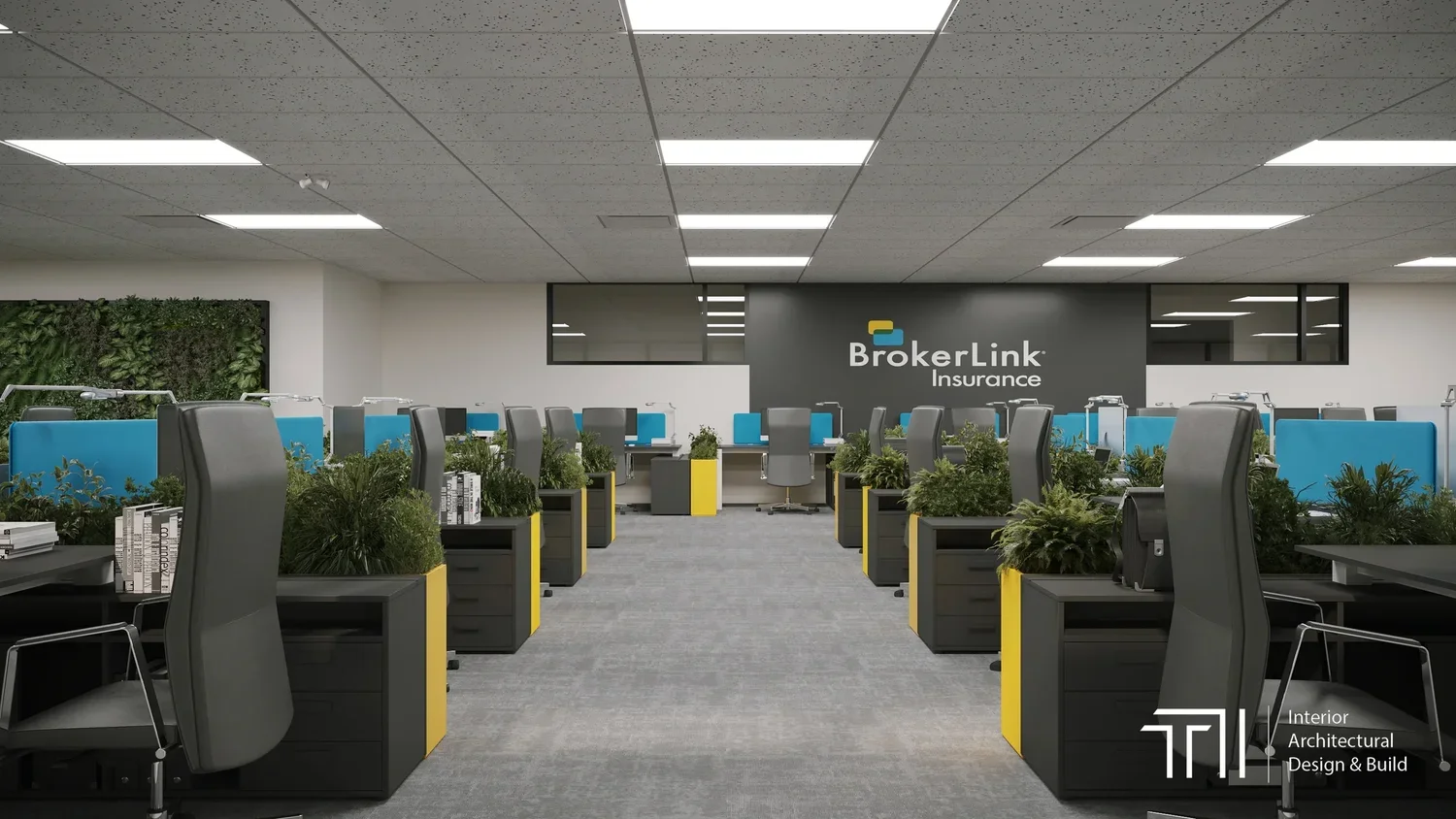
Corporate office interior design shapes how an organization performs, retains talent, and presents itself to the world. The physical environment is one of the few operational levers organizations control directly, and firms that treat it as a strategic asset consistently outperform those that treat it as an afterthought. At Tailored Interior, our work with corporate and commercial clients across Edmonton and surrounding communities has shown that the spaces performing hardest for organizations are never accidental; they're designed with intent from the first concept through final installation.
What Corporate Office Interior Design Actually Does for Your Business
Corporate office interior design is a business investment, not a decorative exercise. The physical environment directly shapes how people work, how long they stay, and what clients and partners perceive when they walk through your door.
The economic case is straightforward. Poor office design weakens recruitment signalling, diminishes client perception on first visit, and accelerates the turnover costs that compound quietly over time. The workspace is among the few variables organizations control directly, and the downstream consequences of getting it wrong are concrete.
The most effective corporate environments solve these problems before they surface, through layout strategy, material selection, and spatial logic that supports the way the organization actually operates.
What Makes a Modern Office Interior Design Actually Work
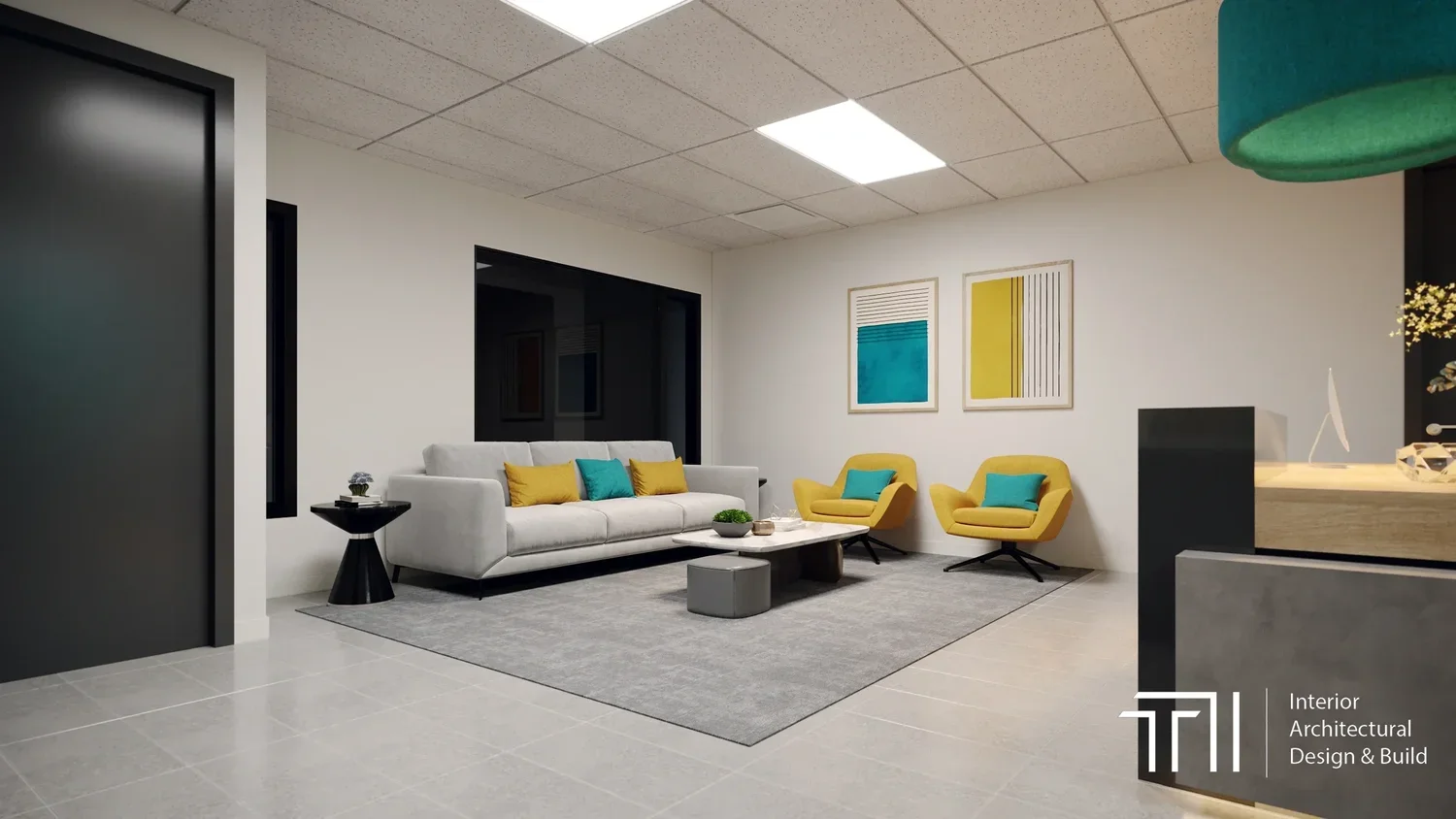
Modern office interior design works when it solves real operational problems while creating an environment people are genuinely motivated to occupy. It isn't a style; it's a system.
Layout Strategy: Balancing Collaboration and Focus
The most effective office floor plans provide a deliberate range of settings. Open collaboration zones support spontaneous conversation and teamwork. Enclosed focus areas — whether private offices, phone pods, or acoustically treated booths — give people the conditions required for deep individual work.
The failure point in most office designs is treating this as an either/or decision. High-performing layouts offer both, calibrated to the actual ratio of collaborative versus independent tasks in the organization.
Natural Light, Biophilia, and Cognitive Performance
The WELL Building Standard incorporates natural light and biophilic design as formal requirements under its Mind concept, reflecting growing evidence that these elements contribute to stress reduction, mood, and cognitive performance over the course of a workday.
Positioning workstations near windows, introducing live plant life, and using natural materials like wood and stone are not stylistic preferences. They're evidence-informed choices that affect how people feel and function over the course of a workday.
Colour Psychology, Furniture, and Brand Identity
These three elements must work as a unified system. Colour palette choices influence mood and cultural signal: cooler tones tend to support focus, warmer tones encourage conversation, and neutral bases allow brand accent colours to carry meaning without overwhelming the space.
Ergonomic furniture, including adjustable seating, sit-stand desks, and mobile collaboration pieces, supports sustained physical performance. Brand identity expressed through material finishes, art curation, and spatial layout communicates organizational values with clarity and without redundancy.
Designing for Hybrid Work: The Gap Most Offices Get Wrong
Most offices designed before 2022 are structurally misaligned with how organizations actually work now. Hybrid work isn't a policy question. It's a design problem.
Touchdown Spaces and Hot-Desking Done Right
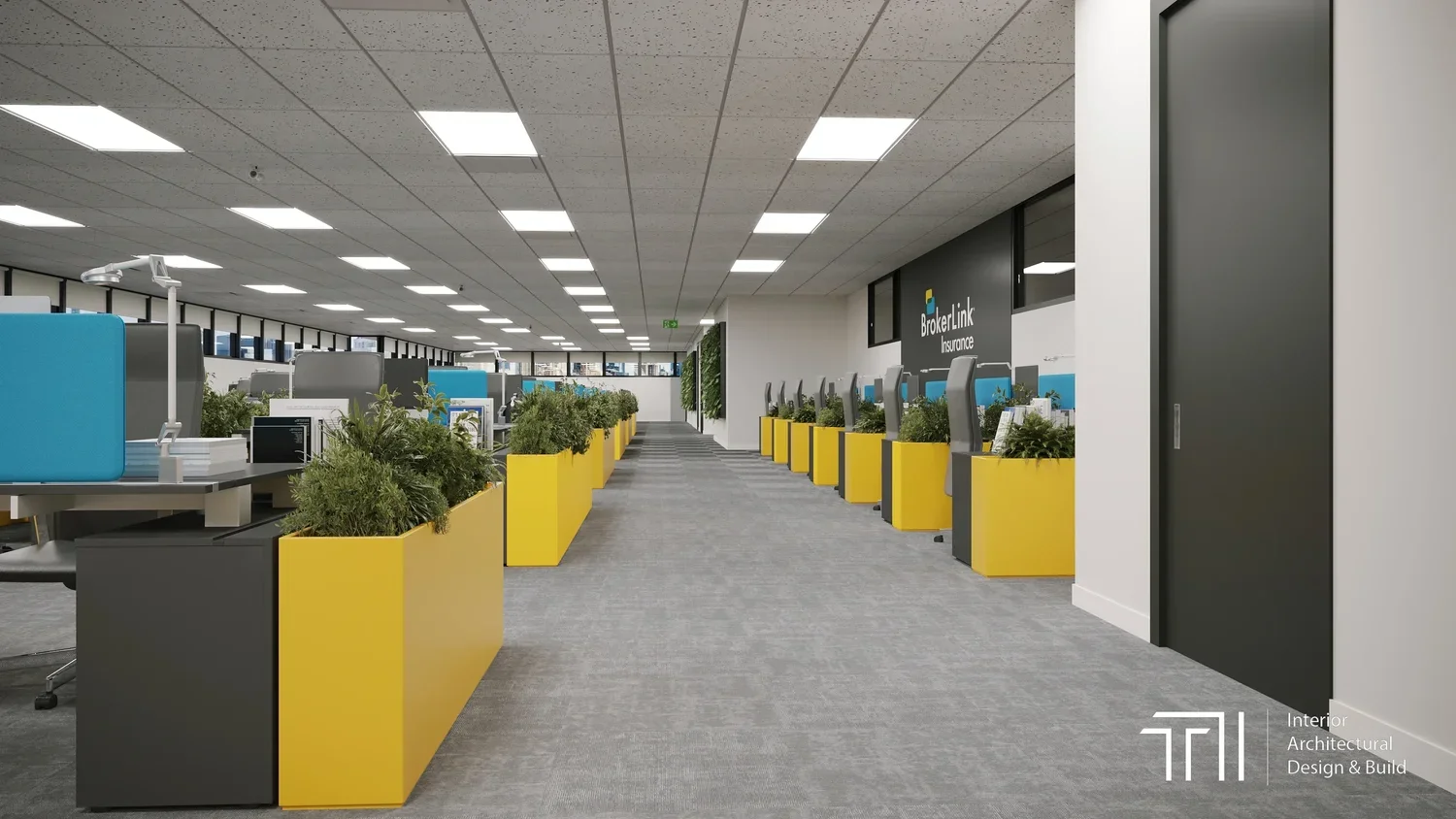
A touchdown space is a flexible, unassigned workstation designed for employees who come into the office occasionally rather than daily. Done poorly, these feel like afterthoughts. Done well, they're ergonomically equipped, well-lit, acoustically managed, and located within the office's natural flow rather than pushed to the perimeter.
Desk reservation systems, integrated with building management software, allow space planners to track actual occupancy patterns and adjust spatial allocations accordingly, reducing or reallocating square footage based on evidence rather than assumption.
Right-sizing an office for hybrid occupancy, based on peak concurrent attendance rather than total headcount, reduces real estate costs while improving the per-person experience on every day of use. Organizations that still maintain pre-hybrid square footage without redesigning for hybrid use are paying for space that doesn't serve anyone well.
AV Infrastructure, Smart Lighting, and Connectivity as Design Inputs
Technology infrastructure must be a first-order design consideration, not a post-construction addition. Meeting rooms in hybrid environments must treat remote participants as first-class attendees, which means camera angles designed around the table, display screens positioned for eye-level video contact, and microphones that pick up the full room.
Smart lighting that adjusts to occupancy and task type reduces energy consumption and supports circadian health. Bandwidth capacity, structured cabling, and wireless access point placement all affect where people can work effectively, which shapes layout decisions directly.
Corporate Office Design as a Brand and Culture Expression
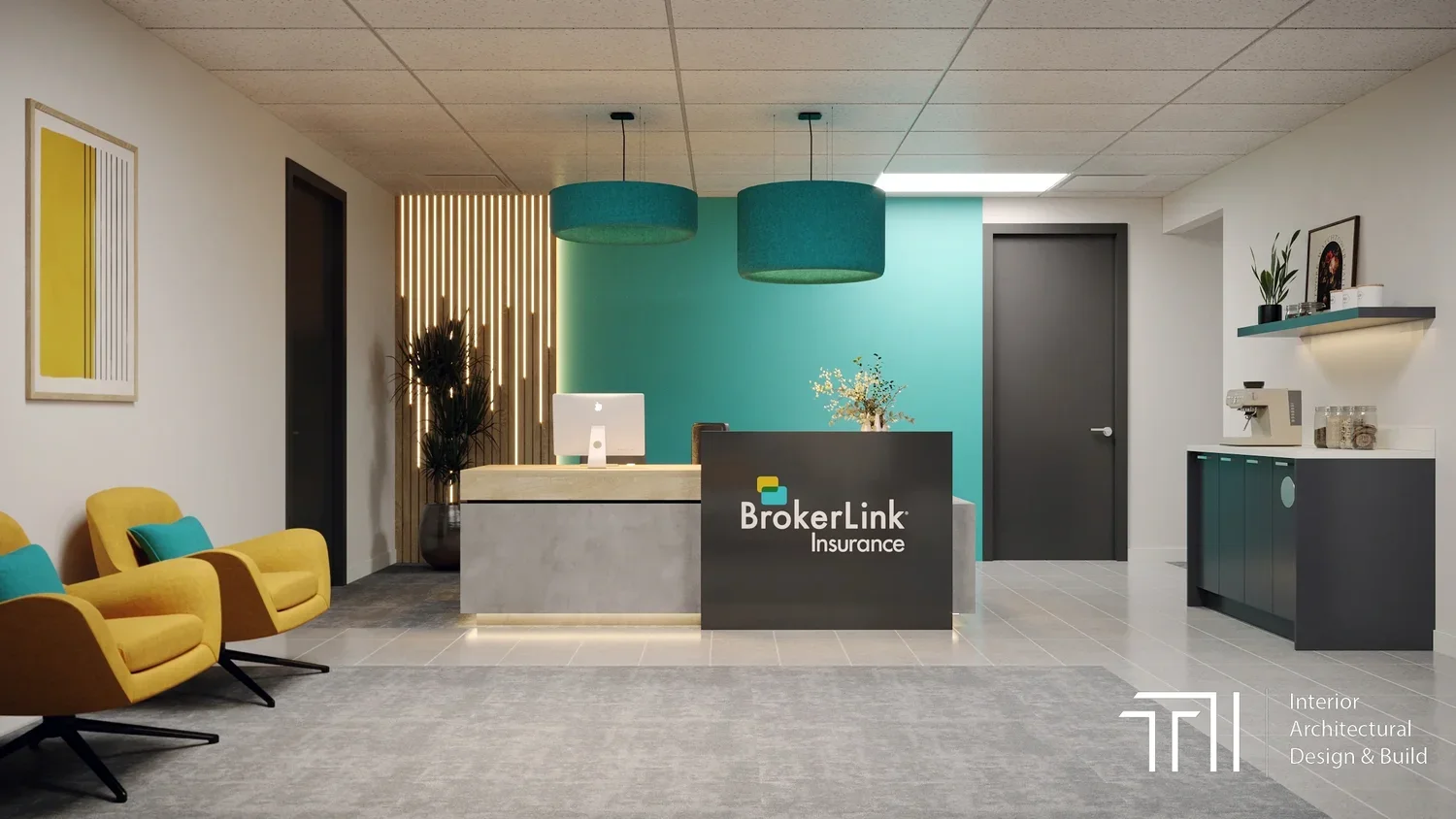
Your office is the most tangible brand touchpoint your employees and clients experience in person. The principles that govern high-end interior design — restraint, materiality, and proportion — apply directly to office environments where first impressions carry strategic weight.
Translating brand identity into spatial decisions begins with the existing brand system, including colour, typographic sensibility, and tone, and extends those values into three dimensions. A reception area is a brand moment: the materials, lighting, signage, and spatial proportions a visitor encounters first form an immediate impression that's difficult to revise.
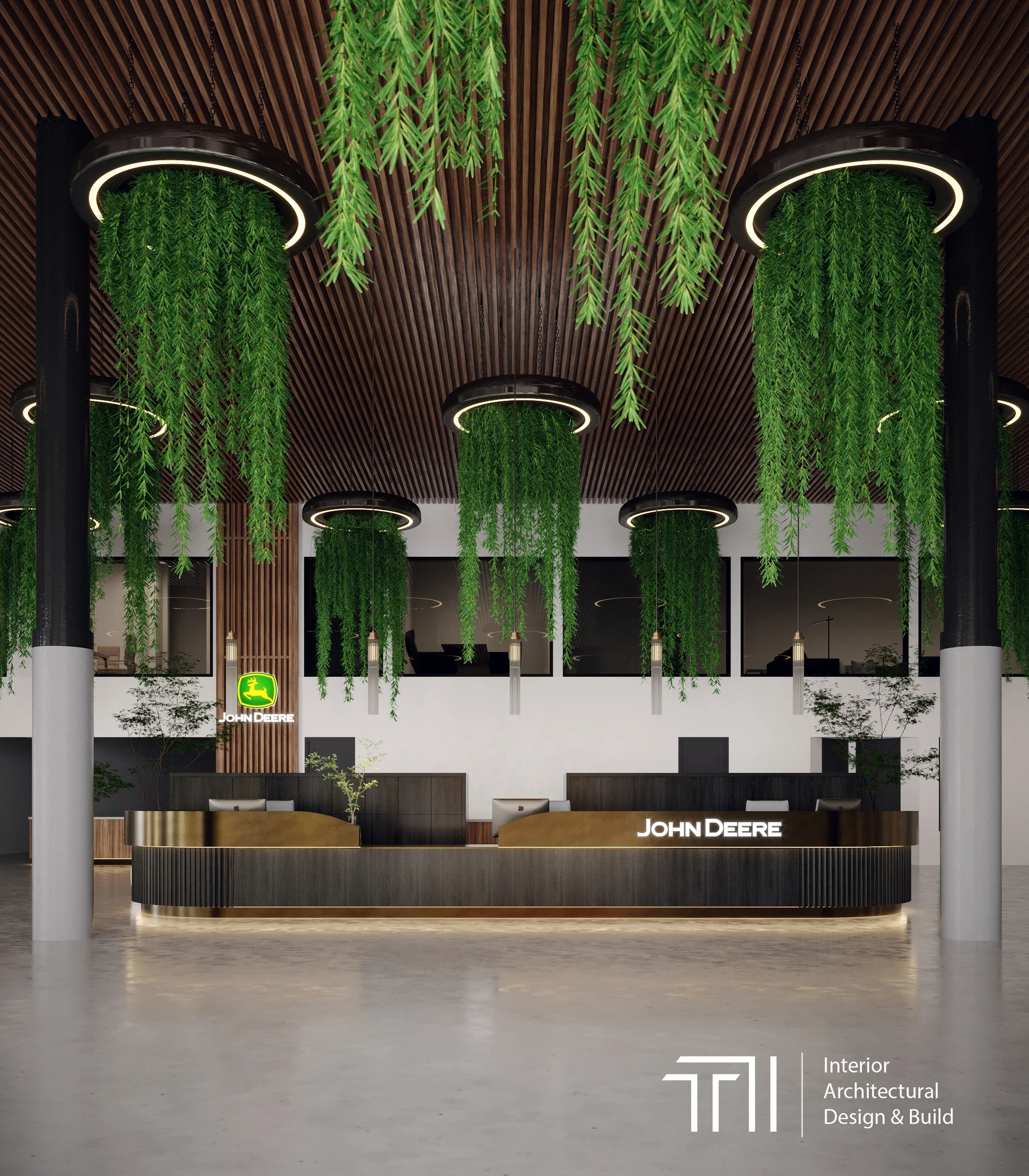
A sustainability-focused company that lines its lobby with reclaimed wood and specifies recycled-content furnishings sends a message about values that no corporate statement can match for credibility. Our commercial project for John Deere reflects this brand identity representation.
Culture-forward design goes a step further. It creates spaces that actively reinforce the behaviours the organization wants to see: innovation hubs with writable surfaces and informal seating, all-hands gathering spaces with flexible configuration, and quiet zones that signal respect for focused work as equally valuable to the company's culture.
Aness Handous, Lead Designer at Tailored Interior and a multiple-award winner at The International Design & Architecture Awards in London, brings this approach to every corporate project. The design challenge in these environments is consistent: communicate both operational precision and creative ambition within a single space.
The resolution — pairing a restrained, material-led palette in client-facing zones with a more expressive, brand-colored environment in internal collaboration areas — serves both the external perception goal and the internal culture the organization is actively building. For office environments where the stakes of first impressions are highest, that level of brand-to-space translation requires strategic clarity and full-service expertise across concept, specification, and execution.
Mental Health, Sustainability, and Inclusive Design: What Leading Organizations Now Build For
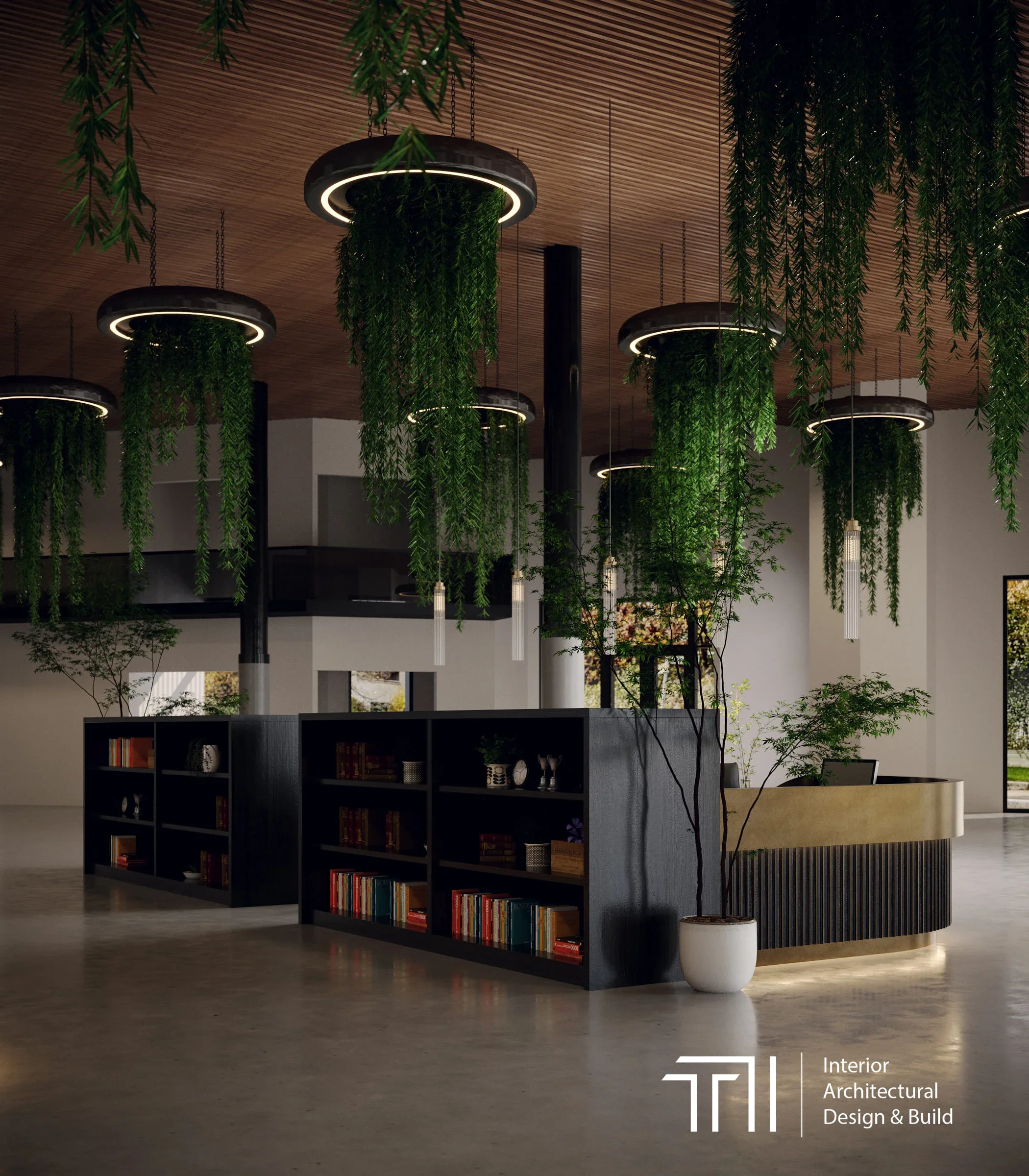
The most forward-thinking organizations in 2026 are treating mental health support, environmental responsibility, and workforce inclusivity as baseline design requirements, not optional enhancements.
Designing for Psychological Wellbeing
Restorative zones, including quiet rooms, meditation spaces, and low-stimulation lounges, give employees environments to reset without leaving the building. Biophilic elements, acoustic control through sound-absorbing panels and strategic layout, and personal control over lighting and temperature all reduce ambient stress in meaningful ways. These aren't amenities. They're infrastructure for sustained performance and reduced burnout.
Sustainability Certifications and Material Choices
LEED (Leadership in Energy and Environmental Design), WELL, and BREEAM are the three primary certification frameworks guiding sustainable commercial office design in 2026. Each addresses different dimensions: LEED focuses on energy, water, and material efficiency; WELL addresses human health outcomes; BREEAM covers broader environmental impact.
Beyond certification, material choices matter. Finishes that favour reclaimed, recycled, or low-VOC materials directly reduce long-term operating costs while supporting ESG commitments that employees and investors increasingly expect to see reflected in physical operations.
Inclusive and Accessible Design
Universal design in a corporate office extends beyond code-minimum accessibility. Neurodivergent employees benefit from low-stimulation zones where sensory input is controlled, with reduced visual complexity, acoustic dampening, and softer lighting. Mobility accommodations designed beyond compliance minimums signal genuine respect rather than legal obligation.
Gender-neutral facilities, adjustable-height workstations that serve a range of physical needs, and wayfinding systems designed for cognitive clarity all contribute to an environment where more people can do their best work.
Small Office and Renovation Projects: Making the Most of What You Have
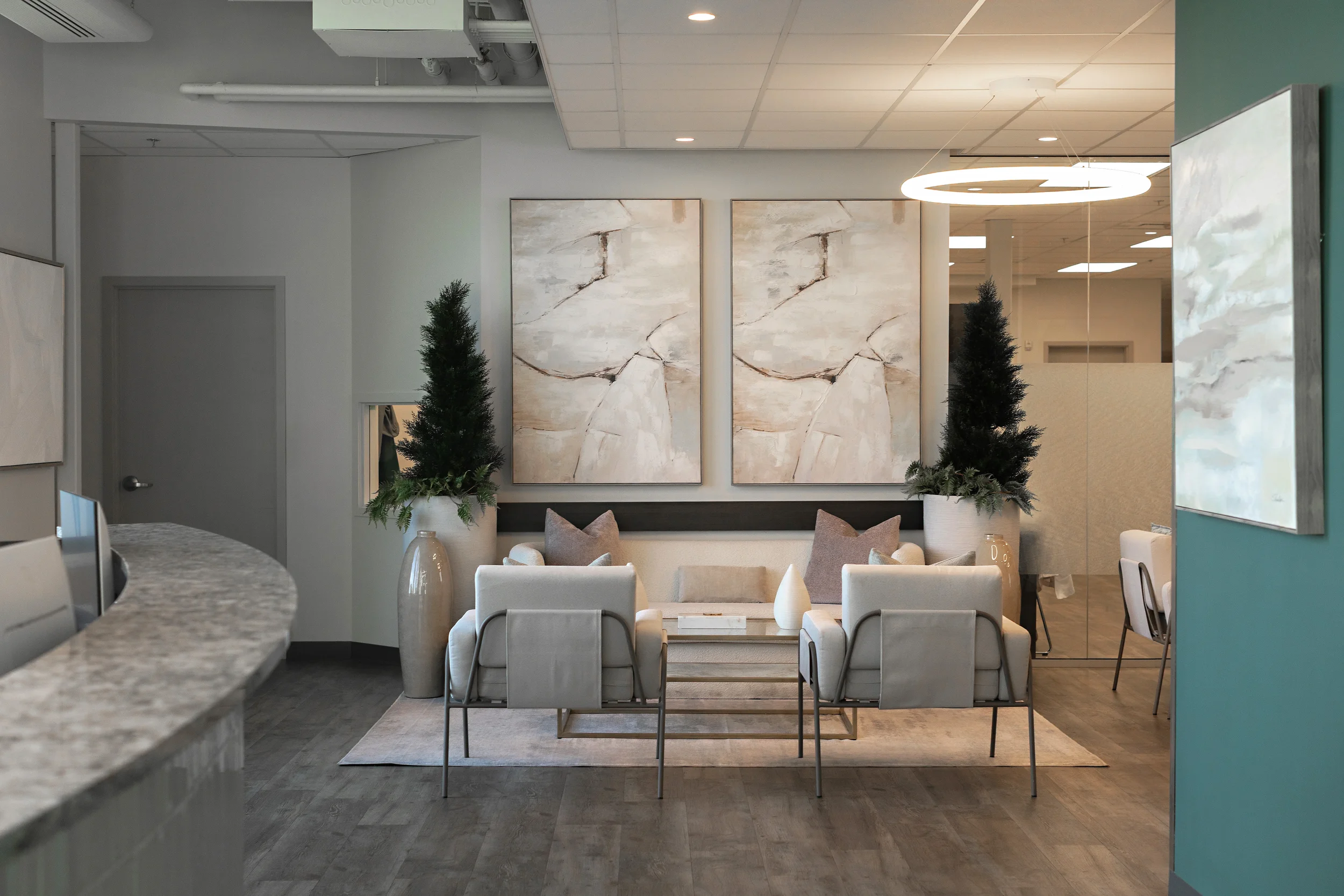
Small-footprint offices and renovation projects represent the majority of real commercial design work, and they require more strategic discipline than a blank-slate new build.
Making a Compact Office Feel Professional and Functional
Space-saving techniques in small office interior design center on eliminating redundancy. Multifunctional furniture (pieces that serve more than one spatial role) is the core tool for recovering square footage that fixed furniture plans waste. Vertical detailing, including wall moulding, adds a professional finish without compressing the perceived volume of the room.
When square footage is genuinely limited, prioritization matters: client-facing zones and collaborative spaces typically earn first priority, with private focus areas addressed through acoustic furniture rather than dedicated rooms.
Renovation vs. New Build: Strategic Considerations
When an existing space can be adapted rather than replaced, renovation is nearly always the more cost-effective and environmentally responsible path. The strategic questions are: what structural elements can be retained, what must change to meet current operational requirements, and how do you phase the work to keep the business running?
Phasing a renovation is completing one zone before moving to the next. This allows organizations to remain operational throughout, which significantly changes the financial calculus.
In Edmonton's commercial market, renovation is particularly relevant because a large proportion of commercial building stock is existing construction. At Tailored Interior, our commercial projects run from $80-$220 per square foot depending on scope, with typical timelines of 8-16 weeks from permit approval.
One team manages the full project — design, permits, and construction — so there are no handoff gaps and no coordination burden on the client. Our experience executing award-recognized renovation work confirms that constraint isn't a ceiling on what professional office interior design can achieve.
How to Work with a Corporate Interior Designer
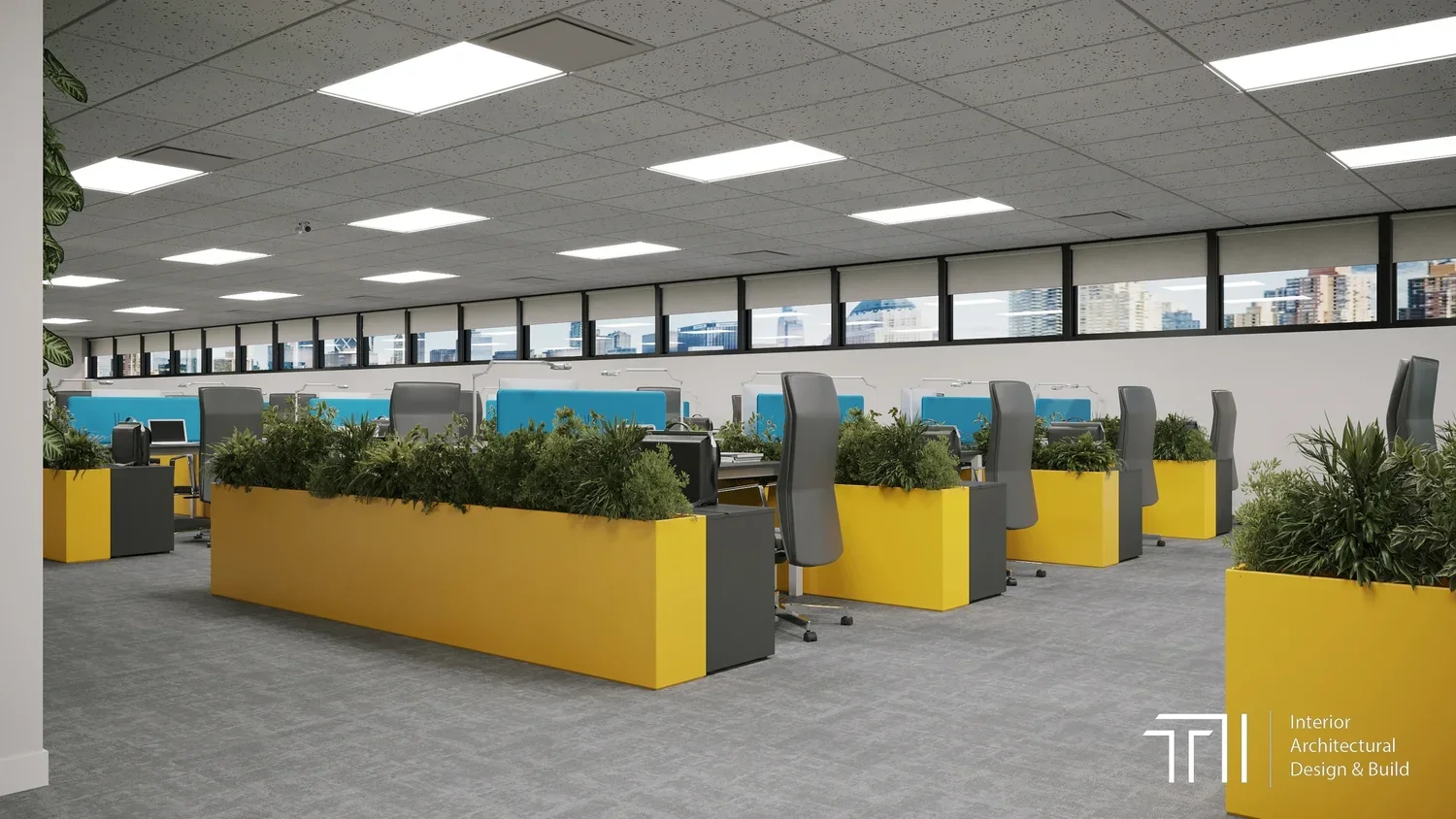
The corporate interior design process follows a clear five-phase structure. Understanding it helps executive clients prepare effectively and reduces risk on a significant capital investment.
Discovery and needs assessment are where the work actually begins. A professional Edmonton interior designer will gather headcount projections, workflow patterns, brand guidelines, operational pain points, and budget parameters before a single concept is developed. What you bring to this conversation directly affects the quality of what follows.
Space planning and concept development translate the brief into floor plan options and a visual concept, covering the palette, material direction, and spatial logic of the proposed design. This is where strategic decisions are made before any money is spent on materials or construction.
Material and specification selection is where the craft of design is most visible. Every surface, fixture, finish, and furniture piece is selected and specified, with quality, durability, lead time, and budget all in play simultaneously.
Project management and execution cover contractor coordination, procurement, site management, and timeline adherence. A full-service interior design firm manages this phase entirely, removing the coordination burden from the client and ensuring design intent is preserved through installation.
Post-occupancy review evaluates whether the completed space is achieving its goals. This is a step most projects skip, and all projects benefit from. Work with a firm that treats this as a standard phase rather than an optional add-on.
FAQs About Office Interior Design
How much does office interior design typically cost?
Commercial office projects in Edmonton typically run $80–$220 per square foot, depending on scope, finish level, and whether the project is a renovation or a new fit-out. That range shifts meaningfully between a functional mid-market office and a premium headquarters environment. The most reliable path to an accurate budget is a professional consultation where the scope can be properly assessed before any numbers are committed.
How long does a corporate office design project take?
Timelines run from approximately 8-16 weeks for most commercial renovations from permit approval to up to 6-12 months or more for large headquarters environments. Phased renovation projects can extend the overall timeline but allow the business to remain operational throughout, which changes the disruption calculus significantly.
What is the difference between corporate office and commercial interior design?
Commercial interior design covers all business-use environments: retail, hospitality, medical facilities, and offices. Corporate office interior design is a specific subcategory focused on workplace environments for organizations, with particular emphasis on productivity, cultural expression, brand alignment, and employee experience. The underlying design principles overlap, but the priorities and performance requirements are distinct.
Can good office design actually improve employee retention?
Yes, employees who work in environments that support their wellbeing, reflect the company's values, and provide the right conditions for their type of work report higher engagement and are more likely to stay. Design that serves people well is design that serves the organization's bottom line.
Do I need a full-service interior design firm or can I manage procurement myself?
Self-managed procurement is possible on simple projects, but it introduces significant coordination risk on anything involving multiple trades, phased construction, or custom specifications. A full-service interior design firm manages concept, specification, contractor coordination, procurement, and installation as an integrated process, protecting design intent and timeline integrity in ways that fragmented management rarely can.
For a capital investment at the scale of a corporate office fit-out, that continuity of expertise from first concept through final installation is where the investment in full-service design pays for itself.
Key Takeaways
Office interior design is a measurable business investment. The physical environment affects how people perform, how long they stay, and what clients perceive when they walk through your door. It's one of the few operational variables organizations control directly.
Hybrid work has created a structural design gap in most offices. Right-sizing for actual occupancy and building AV infrastructure into the spatial plan are now baseline requirements for any office designed for how organizations actually work.
Sustainability, mental health design, and inclusive access are no longer optional. Certification frameworks such as LEED, WELL, and BREEAM, alongside neurodivergent-friendly zones and universal accessibility, are the standard against which modern corporate offices are evaluated.
Small-footprint and renovation projects require greater strategic discipline than new builds. Phasing, adaptive reuse, and prioritization of client-facing zones are the tools that make constrained projects succeed at a professionally recognized level.
The five-phase design process protects your investment. Discovery, concept, specification, execution, and post-occupancy review are how professional interior design firms ensure spaces perform as designed, and why full-service expertise from first concept through final installation matters.
Ready to design an office that works as hard as your team does? Tailored Interior offers full-service commercial interior design for businesses in Edmonton and surrounding communities — from concept through installation, one team, start to finish. Book a free consultation to get started.